Your Role Profile contains information about your role as an ADCH Volunteer Assessor.
View your Role Profile
Your Role Profile contains information about your role as an ADCH Volunteer Assessor.
View your Role ProfileWelcome to ADCH!
On behalf of the Association of Dogs and Cats Homes (ADCH), I’m pleased to welcome you as a Volunteer Assessor. Your commitment to animal welfare is truly appreciated, and we’re delighted to have you join our dedicated team.
Since 1985, ADCH has been the leading charity representing dog and cat rescue and rehoming organisations across the UK, Ireland, Isle of Man, and the Channel Islands. We’re proud to support over 160 member organisations – all registered charities – working together to improve the lives of animals in need. Collectively, we represent more than 5,000 staff and volunteers, united by a shared mission to safeguard the welfare of dogs and cats.
As a Volunteer Assessor, you’ll play an important role in supporting that mission by helping to ensure that our members meet ADCH’s Minimum Welfare and Operational Standards. Your insights and support help raise standards across the sector and strengthen the community of care around our animals.
We value the time and experience you bring, and we hope you’ll find this role both rewarding and impactful. Your involvement helps create lasting, positive change – and we’re excited to have you on board.
Welcome to the ADCH community. We look forward to working with you.
Warm regards,
Michelle Widger
Volunteer Manager
Association of Dogs and Cats Homes (ADCH)
ADCH’s Vision, Mission, Values & Purposes
Our Vision: A positive life for all dogs and cats
Our Mission: ADCH is an umbrella organisation which works on behalf of its members to create a professional and sustainable sector which improves the lives of dogs and cats.
Our Values:
Leadership – ADCH and its Members leading the sector and proactively tackling future issues and facilitating solutions while listening to all involved.
Collaboration – We all share knowledge, expertise, and actions for excellence.
Integrity - High standards including transparency, respect and inclusion.
Professionalism – Innovative experts with ambition for the sector
Support – Helping members to grow and develop together for dogs, cats and people too.
Our Purpose:
The role of ADCH Assessors
The main role of Assessors is to support ADCH’s Strategic Priority to raise standards across the sector. You will do this by assessing prospective and existing Members against the ADCH Minimum Operational and Welfare Standards and supporting prospective and existing members during assessment visits. You may also be asked to help with mentoring and training of new assessors and other tasks relevant to the assessor role.
The assessment reports completed by Assessors are shared with the Standards and Animal Welfare Committee (SAWC). Assessors are the eyes and ears of SAWC and provide them with the information needed to make informed decisions about membership.
The key tasks of Assessors, include but are not limited to:
Categories of Assessor
Definitions:
Trainee: A newly recruited Assessor undertaking their first shadowing opportunities.
Second: An Assessor with sufficient experience in the type of rescue being assessed, to be able to attend and contribute to the assessment, without the support of a Trainer. They will not lead with the administration of the assessment. A VA who has been assessing as a lead or solo assessor for some time may also be a second assessor for a different type of assessment, if they do not have prior experience in that area (e.g. they have been assessing centres for a year, but are attending their first assessment of a foster network)
Lead: An Assessor with sufficient experience in the type of rescue being assessed, to be able to attend and contribute to the assessment, without the support of a Trainer. They will lead with the administration of the assessment, such as setting the date, ensuring paperwork is received for review, and leading on communications
Solo: An Assessor with sufficient experience in the type of rescue being assessed, to be able to carry out the assessment process in its entirety, without the support of another assessor. These assessments are only of existing ADCH members undergoing re-assessment. They will be responsible for the entire assessment process following introduction, through to reporting. If at any stage they identify a reason for including another assessor, they can ask the staff team for support in providing this.
Trainer : An Assessor with sufficient experience in a wide range of assessments, who is able to carry out the entire process with the rescue being assessed, whilst simultaneously providing a training opportunity to a trainee VA by demonstrating and explaining the ADCH process to them, as well as how they are effectively assessing whether or not the standards are met in the rescue.
Support for Assessors

Clare Radlett, Standards and Operations Officer: [email protected]
Clare will be your point of contact for any matters related to assessments and assessment visits.
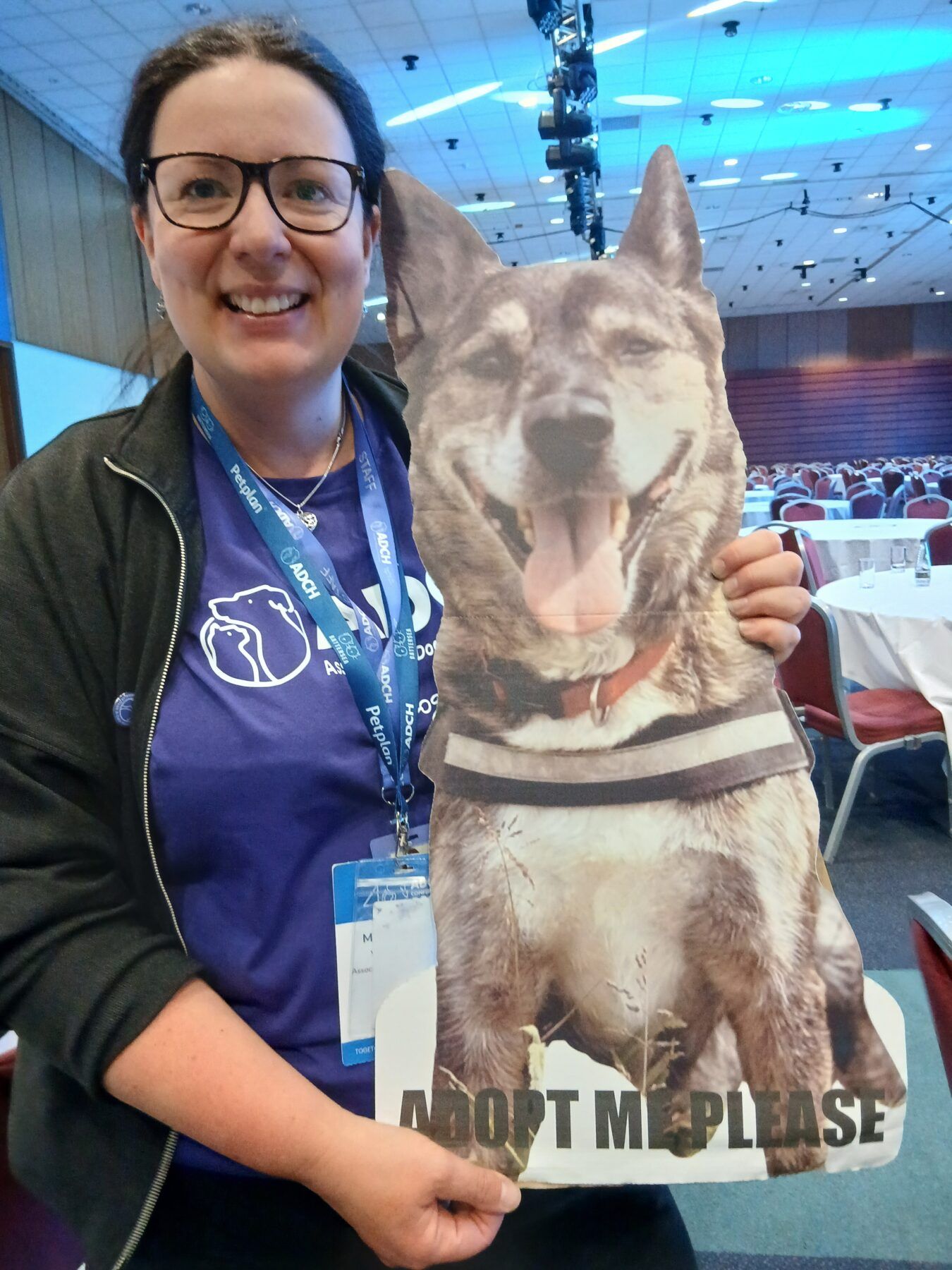
Michelle Widger, Volunteer Manager: [email protected]
Michelle will be your point of contact for any matters related to induction, training and ongoing support (including expenses).
If you are not sure who is best placed to assist you, please contact the Volunteer Manager in the first instance.
Health and Safety for Assessors
When visiting rescues, please familiarise yourself with the health and safety procedures at each site. Ensure you follow any site-specific rules, including sign-in/out procedures. All accidents, injuries, or safety concerns, no matter how minor, must be reported to your Volunteer Manager as soon as possible, who will assist you in completing an incident report and ensure that any necessary support or follow-up is provided.
If you are lone working, ensure that a trusted contact knows your planned movements and whereabouts and that they are aware when you have returned to home/work after a visit. In the case of any threat or discomfort during a visit, leave the site immediately and report to your Volunteer Manager. For further information, please refer to ADCH’s Lone Working Policy V6.
Assessment visit process for Assessors
The summary below provides a typical guide to the process involved in organising and carrying out an assessment visit. Given the highly individualised nature of our Members and potential Members, this process may be slightly different for each assessment you undertake.
Details of which Rescues need Assessors to carry out assessment visits will be shared with Assessors via email, usually in Assessors’ Updates. Information about the assessment and the Assessor/s needed will be included. If you can help with an assessment, please email the Standards and Operations Officer. If you are not sure if the assessment is suitable for you, or if you have any further questions, please email the Volunteer Manager or the Standards and Operations Officer.
Once the Assessor/s needed for an assessment have signed up, the Standards and Operations Officer will send an initial introduction email to the rescue, so they are aware which Assessor/s have agreed to carry out their assessment. Assessors will be copied into this email so that they can then contact the rescue and begin the process of organising the assessment visit. The Standards and Operations Officer will also request that the rescue send any policies and procedures linked to Standards 70 and 78 are sent over to Assessors ahead of the visit.
If two Assessors are carrying out an assessment, please agree between one another who the Lead (see above) will be and discuss any dates either of you will be unavailable to carry out the visit.
The Lead Assessor will then contact the rescue to introduce the assessors, offer to answer any questions the rescue may have, and secure a suitable date for the assessment visit. Some Assessors find a phone call is better for this, especially if a rescue has not been assessed before. Once a date has been secured for the assessment, please let Clare know.
It is useful for Assessors to conduct a little background research into the rescue they are going to be visiting. Sources of useful information, include the rescue’s website and social media, and their Trustees’ Report and Accounts on the Charity Commission website. This research should give you a feel for the rescue ahead of your visit and may highlight some questions you may want to ask or areas you want to investigate further.
Hopefully, the rescue will send these over to you after the Standards and Operations Officer’s initial email, but if not, they may need a reminder from the Lead Assessor. Being able to read over the rescue’s policies and procedures ahead of the assessment visit will save time during the visit and may highlight areas of a rescue’s practice you want to explore more at the visit. If any policies are not in place or they are incomplete, you can share any relevant ADCH toolkits and templates with the rescue ahead of the assessment visit which will enable them to remedy anything missing before their assessment.
You will need to take a copy of the Minimum Standards with you – you can print a copy ahead of time, take an electronic copy on your device or connect to the rescue’s Wi-Fi and use the online Assessment Form. Whilst there is no set format for an assessment visit, most Assessors find that an initial conversation with the staff member/s dealing with their rescue’s assessment is a good way to start and can help build rapport, minimise any anxiety or nervousness about the visit from the rescue and answer any questions the rescue may have. Typically, an assessor will start with an ice-breaker like ‘How are you finding rehoming recently?’ You should use open-ended questions, such as ‘tell me about your admissions process’, which should act us a good start to finding out more about how the rescue works. Conversation can then be directed to any questions you may need to ask to better understand areas of the rescue’s work linked to the Minimum Standards. It may be worth explaining that if the member of staff wants to bring in other members of their team to share their knowledge, that they would be very welcome.
After the initial conversations, a tour of the rescue is the logical next stage of the visit. It is worth asking the rescue for their permission to take photos during the tour – these can serve as useful memory prompts for you and can also be shared with SAWC if there are aspects of the Minimum Standards you would like further input in terms of concerns around compliance, or if there are examples of innovative practice. Please remember to delete any photos you do take after you have completed the assessment paperwork. The tour should enable you to gather more evidence to support your scoring against the Minimum Standards. Try to see as much of the rescue as is possible and ask as many follow up questions as needed to gain a full understanding of how the rescue works.
Measuring dog and cat accommodation is strongly recommended, for this reason it is a good idea to carry a tape measure with you to assessments. You may be able to see that all the animal accommodation is clearly well above the minimum required space, or you may not be sure, or it may obviously be below. ADCH does not set out the minimum required sizing in the Minimum Standards currently, however they can be found in the guidance. This is because:
Having said that, understanding pen sizing is important because:
After the tour, a further conversation with the staff member will be needed to go over your scoring of their rescue against the Minimum Standards. Some Assessors find it is useful to complete the online Assessment Form with the staff member next to them while others go over the Minimum Standards and make notes to complete the Assessment Form after the visit. Unfortunately, the online Assessment Form does not have the capacity to save and return to it later so the whole form must be completed and submitted in one sitting. If you are scoring a rescue as non, or partially, compliant against a Standard, it is helpful if you can suggest an action/s which will move the rescue towards full compliance. If you do suggest an action, please record this on the Assessment Form and share it with the rescue. You can then select an option from the Assessment Form about whether the rescue is willing to add the action to their action plan. If there are areas you do not feel able to offer advice on, further advice can be sought from the ADCH team after the assessment visit. It can be helpful to say to the rescue that, if you’re not sure, ADCH encompasses over 50,000 people working and volunteering in the sector, there is likely an answer or idea within the ADCH community.
When you have gathered all the information you need and the assessment visit is complete, please submit the Assessment Form and any photos you want to share. The completed assessment form will be shared with the rescue and discussed at SAWC where a decision around containing membership (for existing Members) or admitting into membership (for new Members) will be made and shared with the rescue.
If you are assessing a foster network, the process is a little different to the process above. For more detailed about this type of assessment, please see Procedure and Guidance for Indoor Foster assessments.
Members’ Area of the ADCH website
As well as the Assessors’ Area, you also have access to the ADCH Members Area. This area of the ADCH website contains information on the benefits of membership. It is important Assessors familiarise themselves with these benefits so they can signpost them to rescues.
Training and Support for Assessors
Further information on training and support for Volunteer Assessors can be found in SOP 10 Induction & Ongoing Training of Assessors in the Assessors’ Area.
As part of your commitment to the Volunteer Assessor role and ongoing professional development, you are required to engage with training opportunities provided. It is important that you take the time to read all Assessors’ Update emails as these will be the main way training opportunities, information and updates are shared with Assessors.
Expectations of Assessors
We ask our Volunteer Assessors to commit to upholding our Volunteer Agreement and Code of Conduct. By volunteering with ADCH, you agree to act with integrity, respect others, follow our policies, and support the wellbeing of people and animals. In return, ADCH will provide guidance, support, and a positive volunteering environment. This is a mutual agreement and can be ended at any time by either party. You can read the full Volunteer Agreement and Code of Conduct here.
Thank you
Lastly, on behalf of everyone at ADCH, thank you for using your time, skills and expertise to support ADCH’s work. You are a vital part of our work to create a professional and sustainable sector which improves the lives of dogs and cats.

Volunteer Agreement & Code of Conduct
Volunteer Drivers Policy
Added March 2026: Volunteer Drivers Policy V1
Link to sign the Volunteer Drivers Agreement: Sign here
Conflict of Interest Policy
Lone Working Policy
Safeguarding Policy and Procedures
Expenses Policy
Updated on 26 June 2026: Expenses Policy V3
Confidentiality Policy
Data Subject Rights Procedure
ADCH Expenses Claim Form
New version added 18/05/2026: Expenses Claim Form